Culture, Heritage & Identities: The Lomé Initiative for Africa
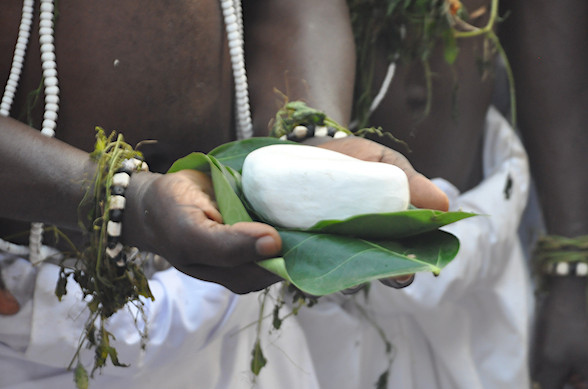
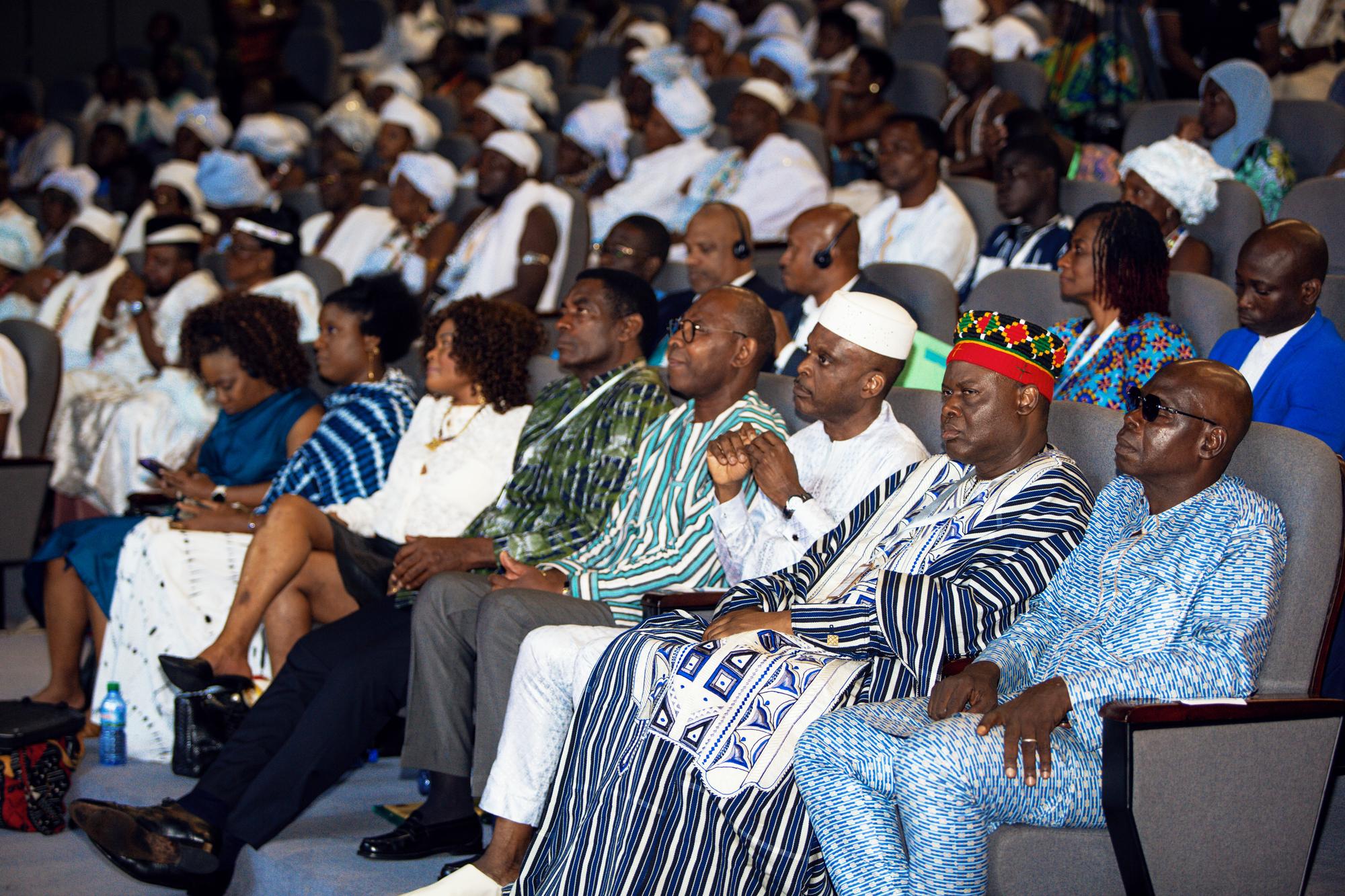
The Cultural Day on the fourth day brought together artists, ministers, intellectuals, and diaspora representatives around a central theme: “Traditions, arts, heritage, and African identities”. Minister Isaac TCHIAKPE launched the Lomé Initiative for Pan-African Cultural Cooperation, while voices from Cuba, Brazil, and French Guiana reaffirmed the unbreakable bonds between Africa and its diaspora. Culture: A Strategic Lever of Sovereignty Minister Isaac TCHIAKPE opened this day with a crystal-clear conviction: “Culture is not a mere supplement to the soul. It is an instrument of sovereignty, of cohesion for the great African family, and of reclaiming our narrative.” The Lomé Initiative proposes a concrete framework for Pan-African cultural cooperation, structured around four major pillars: interministerial cooperation, cultural diplomacy, support for creation, and heritage digitization. This day also celebrated Africa-Diaspora unity through vibrant testimonies from Cuba, Brazil, and French Guiana.

Press release of the scientific committee of the 9th Pan-African congress
Africans & People of African Descent: Building integrated development together
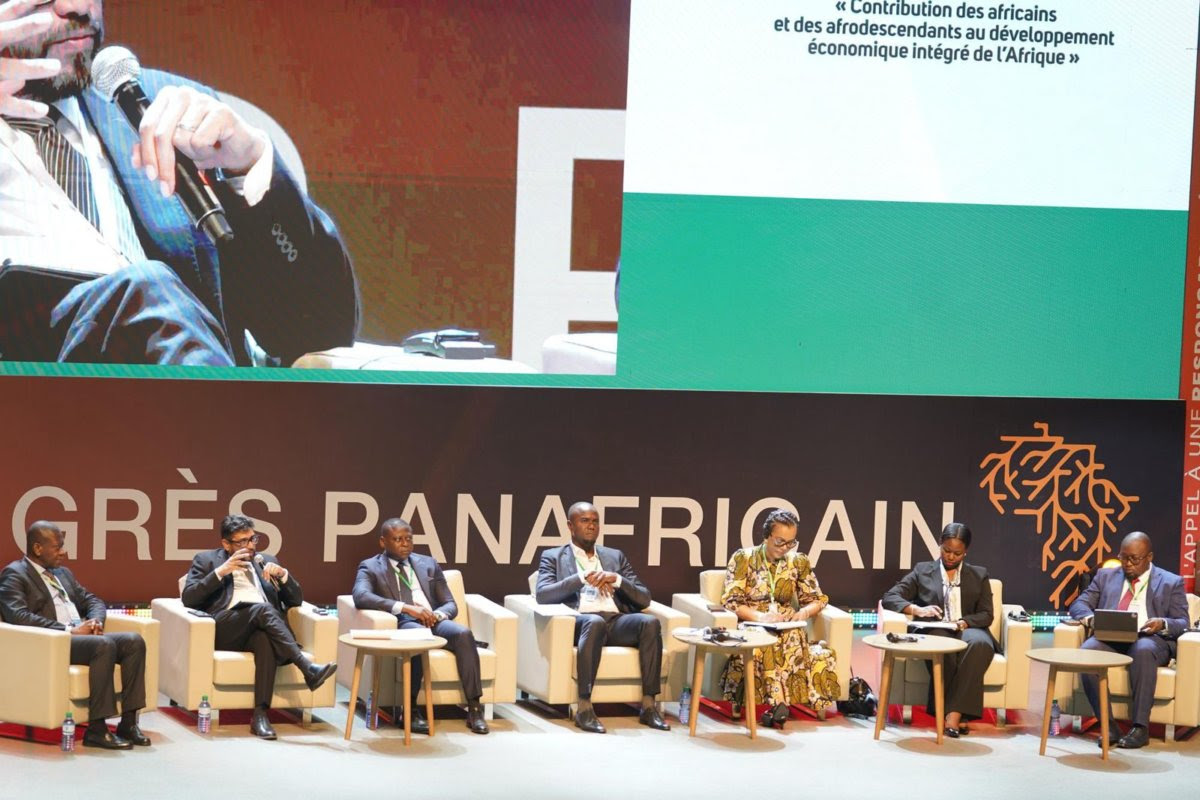
The Economic Round Table on the third day brought together key players in African economic integration around a central theme: ‘The contribution of Africans and people of African descent to Africa’s integrated economic development’. Six leading speakers demonstrated that Africa and its diaspora have the tools, infrastructure and talent to succeed together. The AfCFTA is paving the way, but coordination, information and investment are needed. Africa and its diaspora: a united economic force The African continent is at a strategic turning point: a dynamic youth population, rising production and abundant resources. The sixth region — the African diaspora — represents a considerable economic lever for accelerating continental integration. The pan-African payment system already enables trade in local currencies, with 19 central banks and 80 commercial banks connected, reducing transaction costs by more than USD 5 billion. The AfCFTA is a historic opportunity, but it requires infrastructure, private sector involvement, energy, logistics and the removal of non-tariff barriers.

9th PAN-AFRICAN CONGRESS | A panel on Health and Food Safety:The pillars of African sovereignty
Panel 2 on the third day addressed two issues that are vital for the future of the continent: ‘Health and Food Security’. How can we build resilient health systems? How can we guarantee food sovereignty in the face of climate challenges and external dependence? Five experts shared their analyses and solutions for an Africa that feeds itself and cares for its populations using its own resources, knowledge and skills. Health & Food: two sides of the same sovereignty coin Health and food security are not isolated sectors. They form the foundation of human dignity and a continent’s ability to chart its own course. This panel highlighted a worrying reality: the brain drain of medical professionals, the fragility of rural infrastructure, and the lack of early warning systems in most African countries. But solutions do exist: strengthening local health systems, promoting indigenous knowledge, and rethinking food self-sufficiency in light of African realities.

9th PAN-AFRICAN CONGRESS | A panel on “Africa must becomethe author of its own history”
Panel 1 on the third day of the Congress addressed a crucial issue: ‘Africa’s image in today’s world, issues and challenges in promoting the African narrative’.How can we regain control of the narrative? How can we transform the way the world views Africa — and, above all, the way Africa views itself? Four powerful voices shared their analyses and proposals for a narrative revolution led by Africans and their diasporas, both in digital spaces and within institutions. The African narrative: reclaiming the power of storytelling For too long, Africa’s history has been told by others. Unbalanced narratives, constructed by outside observers, have shaped a reductive image of the continent in the global imagination. This panel demonstrated that narrative sovereignty is as strategic as economic or political sovereignty. Without control over our narrative, we remain prisoners of imposed perceptions. The solution? A structured strategy, strong African platforms, and above all, convincing Africans themselves to become the continent’s best ambassadors.

A new map of Africa is taking shape in Lomé
Participants at the 9th Pan-African Congress in Lomé discussed a rarely addressed issue with profound implications: the representation of Africa on the world map. In line with the international ‘Correct the Map’ campaign, they called for this visual perception, inherited from centuries of Eurocentric cartography, to be corrected. The ‘Correct the Map’ campaign denounces the widespread use of the Mercator projection, invented in the 16th century by Flemish cartographer Gerardus Mercator. This projection, designed for maritime navigation, distorts land areas: countries close to the equator appear smaller than they really are, while regions at high latitudes (Europe, North America, Russia) appear disproportionately large. As a result, Africa, the world’s second largest continent with an area of 30 million km², appears visually smaller than Europe or Greenland, when in fact it is 14 times larger than the latter. For Robert Dussey, Togo’s Minister of Foreign Affairs, this biased representation fuels a distorted perception of power relations and greatness. ‘Correcting the map also means correcting our view of Africa and its role in the world,’ he told the assembled delegations. The minister emphasised the symbolic but strategic nature of this fight: doing justice to Africa means recognising its true geographical, demographic and economic place on the world stage. Launched by African and Afro-descendant academics, artists and activists, ‘Correct the Map’ aims to promote alternative map projections, such as the Gall-Peters projection, which better reflects the actual proportions of land masses. The campaign advocates not only for changes to school and political maps, but also for a revision of collective imaginaries, where Africa still too often appears marginalised.
Sovereignty, unity, identity: the pan-African vision promoted since Lomé
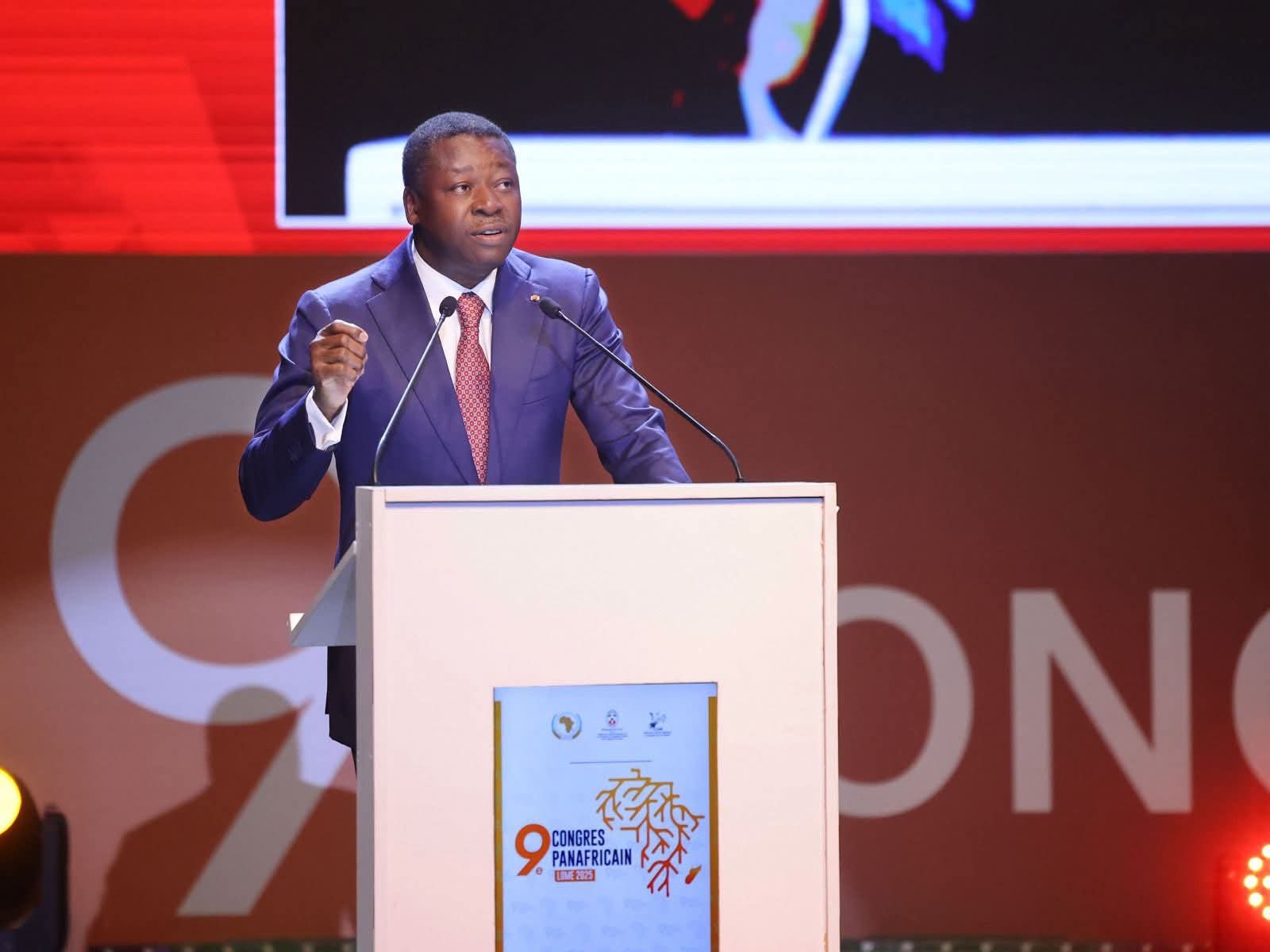
The tone was solemn, the ambition clear. Opening the 9th Pan-African Congress in Lomé on Monday, Council President Faure Gnassingbé delivered a powerful speech, resonating with history and the future. The 9th Pan-African Congress opened on Monday in Lomé in the presence of Francia Elena Márquez, Vice-President of Colombia. Organised in partnership with the African Union, the event brings together officials from across the continent, as well as representatives of diasporas and communities of African descent. The meeting is intended to be a key moment in the renewal of Pan-Africanism. The Pan-African Congress has historically been a forum for debate, ideas and political mobilisation for Africans and people of African descent. Since the first congress was held in London in 1900, these meetings have helped to bring together intellectuals, political leaders and activists who have fought for the independence, unity and dignity of African peoples. The 9th Congress is part of this same mission: to reflect on the current challenges facing Africa, strengthen ties between the continent and its diasporas, and promote a common vision of development, integration and sovereignty. At the heart of the discussions will be a major question: what place does Africa have in global governance? As international organisations – the UN, IMF, World Bank and WTO – evolve and face criticism for their lack of inclusivity, Africa wants to have a greater say in defining global rules. The Congress will examine, in particular, the need for a permanent African seat on the UN Security Council, the continent’s representation in international financial institutions, and the revision of multilateral mechanisms deemed unfavourable to African economies. This year’s event in Togo comes at a time of renewed interest in pan-Africanism. Common challenges – security, industrialisation, migration, climate, governance, digital transformation – require concerted solutions and stronger African leadership.
Africa, Diaspora and Afro-descendants: At Last Weaving the Fabric of a Powerful and Indispensable Solidarity
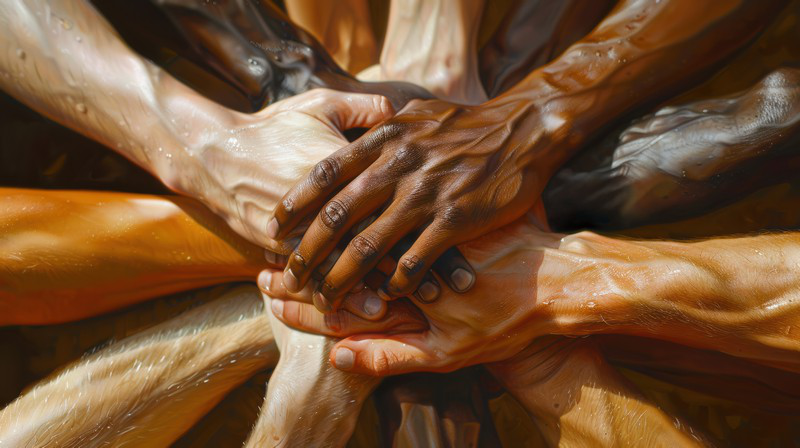
Africa, its diaspora and Afro-descendants make up a human constellation of immense scope and inestimable richness. Yet, despite undeniable historical ties and a common heritage, this vast family dispersed across continents still faces many challenges in strengthening its solidarity and cohesion. Real unity goes beyond a mere slogan; it is a strategic as well as human commitment, indispensable for building a collective future worthy of the hopes nurtured by this remarkable network of energies and talents. Among these challenges, geographic and cultural fragmentation appears perhaps the most pressing. African realities, often very different from one country to another; the multiple trajectories of the diaspora, whether economic, intellectual or political; and the multiple identities of Afro-descendants in America and elsewhere make the building of a true bridge difficult. That bridge, however, is vital; but it is built patiently, stone after stone, discussion after discussion. In this sense, diplomacy plays a key role. Togo, for example, has understood that the link with the diaspora cannot be reduced to an idyllic image or a mere postcard. With pragmatism and a sense of listening, Togolese diplomacy has made the reconquest of its diaspora a fundamental pillar of its foreign policy. Lomé thus became a privileged hub for exchanges where the skills of sons and daughters scattered around the world are mobilized to drive concrete projects, whether economic, cultural or social. This approach, humanistic and far from rigid postures, shows that solidarity can be embodied in tangible actions, blending modernity and respect for roots. It is in this dynamic that the 9th Pan-African Congress in December 2025 at Lomé is situated. More than just a meeting, it will be a genuine laboratory of ideas and convergences bringing together Africans, members of the diaspora and Afro-descendants from around the world. The stakes are high: how to intensify cultural, economic and political exchanges? How to overcome historical barriers and prioritize mutual support? How to turn this diversity into leverage, a driver of innovation and development? How to capitalize on the skills and talents of the diaspora and Afro-descendants? These and other questions will find resonance in the debates, working groups, panels and encounters of this great rendez-vous. Solidarity between these three poles cannot be a chimera; on the contrary, it is a human imperative carrying renewed hope. In this second International Decade of People of African Descent proclaimed by the United Nations for the period 2025-2034, from North to South, from East to West, mobilizing these forces allows African communities and Afro-descendants to recognize themselves, enrich each other and above all lean on one another in facing the challenges of the 21st century: inequalities, injustices, access to education and health, climate change, cultural representations… not forgetting that solidarity also expresses itself in reparative justice. Thus, in the race toward a united future, Togo positions itself as an engaged actor, convinced that diplomacy is also built through humanity and empathy. During the 9th Pan-African Congress, it won’t just be experts who gather, but human beings driven by the same will: to make fraternity rhyme with progress, ambition with respect, geographical distance with proximity of thought. It is this wonderful energy, sometimes unexpected and always precious, that could make all the difference. Because, deep down, solidarity isn’t imposed, it is lived; in exchange, sharing and the profound conviction that together, Africa, its diaspora and Afro-descendants write a story bigger than the sum of their individual stories.

Africa: The Great Shift of Reforms, Reparations and Restitutions for an Assumed African Sovereignty
The African continent, endowed with immense richness and diversity, stands today at a pivotal moment in its history. The reform of multilateral institutions, historical justice, the question of reparations, and the restitution of African cultural treasures together form a complex yet essential equation for Africa to fully assert its sovereignty and unity. A true paradigm shift is underway, one in which hope, challenge and necessity intertwine, with the renewal of Pan-Africanism. This undertaking, simultaneously political, human, social and cultural, resembles the completion of a vast puzzle that the continent is determined to assemble. Let us go back to the foundations: Africa is demanding a just and equitable place on the world stage. In September 2024, during the 79th Session of the United Nations General Assembly, African nations unanimously and resolutely expressed their desire for a profound reform of the United Nations Security Council. They called, with firm determination, for full implementation of the Ezulwini Consensus and the Declaration of Sirte, which provide “for Africa to be allocated two (2) permanent seats with all privileges, including the veto, and five (5) non-permanent seats on the Security Council”, a demand that answers a major imperative of justice. Some countries, including the United States, have manifested their support, provided, however, that such evolution does not entail a further expansion of the veto right, which remains a delicate issue. Since 2016, the African Union has been working to become a more coherent, stronger institution and less dependent on outside aid or funding. The path is winding and the resistances many. However, the example of some African countries illustrates this desire to strengthen unity and reorganize. It is a matter of refocusing energy on essentials, cleaning up governance and improving coordination with the regional economic communities, so that an Africa standing tall consolidates unity and strengthens solidarity. Sovereignty is inseparable from justice, another major battle of the continent. The collective memory of Africa still carries the heavy scars of slavery, the slave trade, colonization and apartheid. It is thus that on 16 February 2025, at the initiative of Togo, Heads of State and Government of the African Union adopted the historic decision on the “qualification of slavery, colonization and deportation as crimes against humanity and genocide against African peoples”, thus crossing a symbolic threshold likely to open the way to reparations. It is not only a matter of numbers but of humanity, a call for recognition of the past to build the future. The Lomé conference held last May as part of the celebration of Africa Day 2025 under the theme “Justice for Africans and people of African descent through reparations” was the occasion for renewed dialogue between Africans and representatives of former colonial powers, where emotion and reason joined forces with the essential delicacy. In the same momentum, the restitution of objects looted during the dark colonial periods emerges as a major act. These treasures, far too often unknown to the general public, represent African wealth too frequently ignored or hidden. Countries such as France or Belgium have begun policies favoring their return. This gesture has a strong symbolic dimension, though insufficient compared to the volume and quantity of artworks present in Western museums: that of a recognition finally assumed. Yet, behind these advances loom real challenges: one must build museums to house them, secure sustainable financing and ensure real involvement of local communities so that these works do not remain mere museum pieces but become living symbols of a revitalized identity. However, this African enterprise can only progress if multiple conditions are met: political patience, prudent management of rivalries, strengthening of economic and educational capacities. Reforming multilateral institutions, justice, reparations and restitution constitute the facets of the same diamond which, once polished, will make Africa shine on the international scene. Togo occupies a strategic position in this context. With modesty but diplomatic determination, the country is preparing to host the 9th Pan-African Congress in December 2025, a decisive event destined to reignite the flame of Pan-Africanism. Under the theme “Renewal of Pan-Africanism and Africa’s Role in the Reform of Multilateral Institutions: Mobilizing Resources and Reinventing Itself to Act”, this meeting will bring together representatives of African states, diaspora communities and Afro-descendants around fundamental questions such as sovereignty, memorial justice, continental solidarity and global institutional reform. This event, preceded by six regional preparatory conferences held in the six regions of the continent including the diaspora region (Bahia, Brazil), will be a crucial moment of exchange. Through this initiative, Togo reaffirms its capacity to play a major role in building Africa’s future, uniting hopes for a rediscovered unity, affirmed sovereignty and lasting peace. By hosting the 9th Pan-African Congress, Togo once again inscribes its name in the history of Pan-Africanism and reminds all of the strength of an Africa capable of acting collectively and consciously to overcome its challenges. By listening to the vibrant voices of African populations, especially African youth, and those of people of African descent, perceiving the energy flowing from cities, villages and Afro-descendant communities, one realizes that Africa is ready. Ready to make its voice heard, proud of its memory, engaged in building a future worthy, collective and sovereign. Such is the grandeur of this moment: a continent resetting the clock and continuing to write its own history, in ink of hope and determination.