
H.E. Professor Robert DUSSEY, Minister of Foreign Affairs, Regional Integration and Togolese Abroad, chaired, on September 23, 2025 in New York, on the sidelines of the 80th session of the United Nations General Assembly, a high-level event as part of the decade 2021-2031: “Decade of African Roots and African Diaspora” and the preparations for the 9th Pan-African Congress in Lomé 2025, on the theme: “The United Nations 80 years later: Accelerating the Reform Agenda and Strengthening the Momentum Towards Justice and Reparations”. Co-organized by Togo and the African Union Commission (AUC), this meeting is part of the current debate on ways and means of rethinking the existing structures of multilateral organizations and accelerating the processes leading to restorative justice for the historical injustices suffered by Africa. In addition to Prof. DUSSEY, this high-level event was also attended by H.E. Mahmoud Ali YOUSSOUF, Chairperson of the AU Commission, H.E. Tété Antonio, Minister of Foreign Affairs of the Republic of Angola, Chairperson of the AU Executive Council, H.E. Samuel Okudzeto ABLAKWA, Minister of Foreign Affairs of Ghana, representatives of AU Member States, Germany, Portugal, Russia, ECOSOC, civil society, diaspora organizations and Afro-descendants. During the opening ceremony, H.E. Mr. Mahmoud Ali YOUSSOUF, Chairperson of the AU Commission, praised the exemplary role of Togo and Ghana in preserving memory and promoting courageous dialogue on issues that concern all of humanity, namely justice, reparations and the reform of global governance. According to him, the issue of restorative justice is not about dwelling on the pain of the past but rather about building a better future by rebalancing the international order. Therefore, this issue is not limited to material reparations but must extend to investments in health, education, infrastructure, technology, etc., and to reforming global governance for greater inclusivity. For H.E. Mr. Tété Antonio, Minister of Foreign Affairs of the Republic of Angola, Chairperson of the AU Executive Council, the UN has played a crucial role in promoting peace, protecting human rights…and implementing initiatives…to support sustainable development. However, the world continues to face significant challenges…such as historical injustices that require a strong and firm response. The eight decades of existence of the United Nations bear witness to the importance of this organization in promoting peace, stability and development, but also highlight the need for structural reforms to better reflect the diversity and aspirations of peoples, by strengthening justice, accelerating institutional reforms and facilitating reparations for past injustices. Africa, as a continent of resilience and hope, embodies this need for restorative justice. Acknowledging past injustices, particularly through concrete actions for reparations, is an essential step towards establishing lasting peace and social cohesion. In his speech, H.E. Mr. Samuel Okudzeto ABLAKWA, Minister of Foreign Affairs of Ghana, highlighted the urgent need for reforms to the multilateral system, which he described as unbalanced. In this regard, H.E. Mr. ABLAKWA welcomed the upcoming 9th Pan-African Congress in Lomé, which provides a good opportunity for Africa to pave the way for restorative justice. He proposed three urgent actions to be taken in the contemporary context of geopolitical change to achieve reparation, namely: reform of the UN, strengthening ties in favor of reparation and the creation of bridges and solidarity between the AU and the Caribbean Community (CARICOM) through a united dynamic. He ended his speech by calling for the acceleration of reforms through concrete and urgent actions at the risk of accentuating injustices. Their speeches were followed by two presentations. The first, given by Ambassador Amr ALJOWAILY, Director of Citizen and Diaspora Organizations (CIDO), focused on the theme: “Reforms and Restorative Justice: What Roadmap?” Ambassador ALJOWAILY recalled the missions assigned in the roadmap contained in the AU’s 2025 theme: “Justice for Africans and people of African descent through reparations”. He then indicated that reparations are an AU commitment aimed at restoring dignity, healing historical wounds, returning cultural property and redressing the historical injustices suffered by Africans and people of African descent due to slavery, colonization and apartheid. He finally described the process and mandates to achieve reparations and mentioned the launch of the financing architecture for the consequences of the Atlantic slave trade and the burden of colonization. He urged the establishment of a common mechanism or an African common position on the issue of reparations. The second presentation, entitled “Towards the 9th Pan-African Congress in Lomé 2025: Communication and Announcements”, was made by Mr. Afognon Kouakou SEDAMINOU, Coordinator of the Diaspora Desk at the Togolese Ministry of Foreign Affairs, Regional Integration and Togolese Abroad. He recalled the context, objectives and specificities of the said congress, the holding of the six regional preparatory conferences for the 9th Pan-African Congress as well as the practical arrangements that are part of the organization of the Congress. The coordinator also reassured the participants of the Togolese government’s commitment to making the 9th Pan-African Congress a truly inclusive and successful event. These presentations were followed by enriching discussions. Representatives from Germany and Russia, for example, expressed their support for the African struggle for justice and reparation. During the closing ceremony, H.E. Ms. Selma Malika HADDADI, Deputy Chairperson of the AU Commission, noted the determination and momentum of Africans and people of African descent for justice and reparation. She praised the crucial role played by Togo in this regard, which initiated the historic decision of the Heads of State and Government of February 16, 2025 on the “qualification of slavery, deportation and colonization as crimes against humanity and genocide against the peoples of Africa,” called for accelerating the reform agenda of multilateral institutions and urged massive participation in the 9th Pan-African Congress in Lomé. H.E. Prof. Robert DUSSEY expressed his sincere thanks to the participants for their strong mobilization at the meeting and invited them to take part massively in the 9th Pan-African Congress in Lomé 2025.

Second Africa – Caribbean Summit on : “Transcontinental Partnership in Pursuit of Restorative Justice for Africans and People of African Descent through Reparations”
Ladies and Gentlemen, At the outset of my statement, I wish to convey to you the apologies and warm greetings of your brother, His Excellency Mr. Essozimna GNASSINGBÉ, President of the Council of the Republic of Togo, who was unable to travel to personally attend this 2nd Africa–CARICOM Summit held under the theme: “Transcontinental partnership in pursuit of restorative justice for Africans and people of African descent through reparations.” He has entrusted me with the honour of representing him and speaking on his behalf on the topic: “Qualification of slavery, deportation, and colonization as crimes against humanity and genocide against the peoples of Africa and the 9th Pan-African congress,” as requested of Togo. Distinguished Guests, Ladies and Gentlemen, The partnership between Africa and CARICOM is one of fraternity. Placing this partnership between continental Africa and the Africa of the Caribbean at the service of the common cause of reparations reflects the following truth: by joining forces to carry the cause of reparations, we will serve it better. This awareness marks an important step in the fight and the long journey of Africa and the Caribbean Community for the recognition and reparation of the crimes their peoples have endured. For more than four centuries, millions of our ancestors were torn from their families and their lands, chained, crammed into the dark holds of slave ships, reduced to mere commodities in a sinister logic of objectification. They were sold in the public squares of the Americas and the Caribbean, subjected to the harshest labour, stripped of their identity, deprived of their freedom, in flagrant violation of the sacred laws of humanity and human dignity. To this tragedy of the slave trade and slavery, was added that of colonization. Behind the hypocritical mask of the so-called “civilizing mission” lay the systematic humiliation of African peoples, the confiscation of their lands, the plundering of their wealth, and the removal of their cultural identity. It was also the massacres: those of the Herero and Nama in Namibia between 1904 and 1908, of Thiaroye in 1944 in Senegal, of Madagascar in 1947, of Congo under King Leopold II, and of the Mau Mau in Kenya between 1952 and 1960. Aimé Césaire powerfully declared: “Colonialism is not about civilizing, it is about decivilizing,”it is aboutdehumanizing, destroying, and stripping away. The gravity of these historical injustices, which were criminal acts carefully conceived, planned, and systematically executed against the peoples of Africa and persons of African descent, have determined Togo to submit to the decision making bodies of the African Union the request that led to the historic Decision on the “Qualification of slavery, deportation, and colonization as crimes against humanity and genocide against the peoples of Africa,” adopted by the Conference of Heads of State and Government on February 16 of this year. This decision of qualification responds to the most pressing aspirations of the peoples of Africa, of Afro-descendants, of diaspora organizations, and of African civil society for justice and reparation. It has enabled Africa to put its own words to its historical suffering, to promote a better knowledge of the painful periods of the continent’s history among younger generations, to begin healing the deep scars left on African societies, to send a strong message to the international community about its thirst and expectations for recognition and reparations for the historical injustices its peoples endured, and to assert its leadership on the question of reparations in order to avoid having the terms of the debate dictated to it. Africa does not expect pity or charity from the world. We demand recognition and reparations. Recognition of the magnitude of the crimes committed. Recognition of the deportation of our peoples, recognition of the disruption of Africa’s historical trajectory, recognition of the duty of justice toward the peoples of Africa and the African diasporas, recognition of our peoples’ right to reparations, reparations for the crimes committed against Africans and people of African descent. In itself, this act of qualification represents a shift of paradigm. Instead of leaving to the descendants of the perpetrators the right to define their crimes, Africa and Africans have placed their own words on the crimes they endured. This act of qualification is a significant milestone in the African and Caribbean struggles for reparations. Reparations, both material and symbolic, to heal the wounds of history. Rehabilitation of African memory, to restore to dispossessed peoples the pride of their dignity. For what was destroyed were not only lives, but also the self-esteem of an entire continent. Acknowledging these crimes is not about resentment. It is about affirming a universal truth and strengthening the common humanity of all peoples. Excellencies, Heads of State and Government, Distinguished Guests, Togo’s commitment, alongside the brotherly nations of the continent and the Caribbean, to the cause of reparations is fully in line with the implementation of the 2021–2031 Decade of “African Roots and the African Diaspora,” proclaimed by the Conference of Heads of State and Government in February 2021 at its request. This Decade honors people of African descent and African diasporas because we became fully aware that the destinies of continental Africa and of Africa in the diasporas are closely linked. It is within the framework of this same Decade that the organization of the 9th Pan-African congress, to be held from December 8 to 12, 2025, in Lomé under the theme “Renewal of Pan-Africanism and the role of Africa in the reform of multilateral institutions: mobilizing resources and reinventing ourselves for action,” was entrusted to Togo by the Conference. Pan-Africanism, as we know, emphasizes solidarity among African nations in order to transcend the divisions inherited from colonization, and solidarity between Africans and Afro-descendants with the aim of reconnecting Africa and its diaspora. According to President Kwame Nkrumah, the term came into use at the beginning of the 20th century when the Trinidadian Henry Sylvester-Williams and African American William Edward Burghardt Du Bois “used it during several Pan-African congresses.” “The idea of Pan-Africanism first arose as a manifestation of fraternal solidarity between Africans and peoples of African descent” as George Padmore said. The 9th Pan-African Congress in Lomé will provide an opportunity to reaffirm

The London conference, 125 years later Pan-Africanism and reparations leading to Lome 2025
125 years after the first Pan-African gathering in London, we come together to honor the legacy of those who dared to dream of unity, dignity, and justice for African peoples worldwide. Their fight against racism, oppression, and exclusion continues to inspire generations. From London to the world, we carry the torch of Pan-Africanism forward — through dialogue, action, and remembrance. 🌍✊🏿 The London Conference, 125 years later, represents a pivotal moment in the history of Africa and its diaspora. This historic event offers the opportunity to initiate a sincere and respectful dialogue on the injustices committed against African peoples. It is a chance to address the wrongs of the past and prepare for a future based on peace, unity, and reconciliation. Together, we can build a shared future, reconciled with our history. Genuine dialogue remains the key to moving forward toward a more just and equitable world. PanAfricanism #125YearsLater #UnityInDiversity #AfricanDiaspora #ReparationsDialogue #FromLondonToTheWorld #AntiRacism #BlackHistory #AfricanUnity #GlobalSouthVoices #LegacyOfResistance #PanAfricanConference #JusticeAndDignity #AfricanHeritage #RememberAndRise #LondonConference #125Years #PanAfricanism #Reparations #AfricaUnity #HistoryAndFuture #JusticeForAfrica #Reconciliation #AfricanDiaspora #PeaceAndUnity

ADOPTION OF THE DECISION ON THE CLASSIFICATION OF SLAVERY, DEPORTATION AND COLONISATION AS CRIMES AGAINST HUMANITY AND “GENOCIDE” AGAINST THE PEOPLE OF AFRICA
DECLARATION OF TOGO BY PROF. ROBERT DUSSEY Togo welcomes the adoption on this 16 February 2025 by the Assembly of Heads of State and Government of the African Union, at its 38th Ordinary Session, of the Decision on the “Classification of Slavery, Deportation and Colonisation as Crimes against Humanity and GENOCIDE against the Peoples of Africa“. This historic Decision, taken on the initiative of Togo under the leadership of H.E. M. Faure Essozimna GNASSINGBE, President of the Republic of Togo, marks a milestone in the quest of the African peoples and people of African descent for the just recognition and reparation of the crimes of slavery, deportation and colonisation. The history of Africa and its peoples over the last five (05) centuries has been marked by a series of injustices and events that are as tragic as they are unacceptable. The gravity of these historical injustices, which were criminal acts that were well thought out, planned and methodically executed, perpetrated against the peoples of Africa and people of African descent, led Togo to submit to the decision-making bodies of the African Union the request that led to this Decision, which responds to the most pressing aspirations of the peoples of Africa, Afro-descendants, diaspora organisations and African civil society for justice and reparation. The adoption of this Decision, which is in line with the African Union’s theme for 2025 “Justice for Africans and People of African Descent through Reparations”, ‘, is a decisive step in this quest for historical justice and a stepping stone towards reparations for the peoples of Africa and Afro-descendants. The Decision on the classification of slavery, deportation and colonisation as crimes against humanity and GENOCIDE against the peoples of Africa allows Africa to put its own words on its sufferings throughout History, to work towards a better knowledge of the painful periods of the continent’s history by the younger generations, to begin the work of healing the deep scars left in African societies, to send a strong message to the international community about the thirst and expectations for recognition and reparation of the historical injustices suffered by its peoples, to take the lead on the issues of reparation and restitution so as not to allow others to dictate the terms of the debate, to deny legitimacy to any rhetoric that seeks to justify slavery and colonisation, to have a precise and appropriate language in its struggle for reparation and restitution on the international stage, and to protect present and future generations of Africans and Afro-descendants from the risk of a resurgence of slavery and colonisation. In its Decision, the Assembly of Heads of State and Government invited Member States, regional organisations and organisations of African civil society and the Diaspora to take various initiatives to ensure that new generations have a better understanding of the crimes and deliberately concealed sequences of the history of slavery and colonisation. The Togolese Government wishes to thank the new Chairperson-in-Office of the African Union, the Assembly of Heads of State and Government and the Commission for their historic sense of responsibility in adopting this Decision. For its part, Togo, which has been mandated by the Assembly of Heads of State and Government to take the lead in monitoring the implementation and impacts of the Decision, undertakes to carry out this mandate responsibly, in cooperation with the AU Commission and all Member States, Diaspora organisations, Afro-descendants and international organisations. For Togo, the Decision on the classification of slavery, deportation and colonisation as crimes against humanity and GENOCIDE against the peoples of Africa is a crucial step, a landmark victory in Africa’s quest for self-determination and control over its own destiny. This Decision will make the issue of historical justice and reparations one of the key themes of the 9th Pan-African Congress to be held in Lomé, Togo, this year 2025.

Prof. Dussey invited to the inaugural ceremony of the symposium commemorating 140 years of the Berlin Conference 1884-85
On January 29, 2025, Togo’s Head of Diplomacy was the guest at the inaugural ceremony of the symposium commemorating 140 years since the Berlin Conference of 1884-1885. In his speech, Prof. Robert Dussey emphasized that “140 years after the Berlin Conference, Africa intends to be at the center of its own decisions, to be self-determining, to speak for itself and to carry its own voice on the international stage. The current revival of the pan-African ideal on the continent and among the African diasporas should be understood as such.” He also pointed out that the current generation of Africans belongs to an Africa that has decided to take its history and destiny into its own hands, to be itself on the great stage of universal history. The event, held on January 29 and 30, 2025 at the KfW headquarters in Berlin, is under the patronage of the former Federal President of Germany, Mr. Horst Köhler, and the former President of the Republic of Liberia, Mrs. Ellen Johnson-Sirleaf, who also took part in the opening ceremony. The Symposium brings together a panel of experts to discuss the Berlin Conference and its significance in today’s world. It is jointly organized by the German Foundation for Africa, represented by its President Dr. Uschi Eid; the University of Dar es Salaam, represented by its Vice-Chancellor Prof. William-Andey Anangisye; and the Farafina Afrika-Haus in Berlin, represented by its Director Mr. Oumar Diallo. For the organizers, such a symposium bringing together German, African and European political decision-makers, as well as representatives from academia, business and civil society, to discuss the Berlin Conference, address colonial history and achieve shared learning and memory, is a necessity in order to deepen the African-European partnership and discuss together perspectives for the future. Accordingly, various technical and political discussions will take place over the two days of the symposium, highlighting the past, present and future of Euro-African relations.

Update on the 8th meeting of the high committee in charge of the 2021-2031 decade of African roots and the African diaspora
On October 18, 2024, Prof. Robert DUSSEY, Minister of Foreign Affairs, Regional Integration and Togolese Abroad, chaired the 8th meeting of the High Committee in charge of the agenda for the Decade of African Roots and the African Diaspora. The meeting, held online, was attended by H.E. Dr Monique NSANZABAGANWA, Vice-President of the African Union Commission, representatives of the committee’s member states, and the African Union Commission’s Citizens and Diaspora Directorate (CIDO). The meeting provided an opportunity for Minister DUSSEY to apologize to member states for any inconvenience caused by the postponement of the 9th Pan-African Congress. He gave two reasons for the postponement: firstly, logistical reasons; secondly, the government’s desire to make the Congress more inclusive, notably by involving all interested States, populations, Afro-descendant communities, pan-African and pan-Africanist associations and organizations, so as to leave no one out. The exact date of the 9th Pan-African Congress, which will now take place next year, will be communicated in due course, following internal consultations between Togo and the African Union Commission. The participants expressed their keen interest in participating at the highest level in the 9th Congress. They congratulated the Togolese government which, under the leadership of the President of the Republic H.E. Faure Essozimna GNASSINGBE, is resolutely continuing preparations for this important international meeting, which will bring together the continent’s Africans and Afro-descendants at a time of renewed Pan-Africanism.
Information note
Information note of the organisation Committee This is to provide information on the practical and logistical details of the 9th Pan-African Congress to be held in Lomé from October 29 to November 2, 2024. Information service A committee in charge of organizing the 9th Pan-African Congress has been set up and is located at the ministry of foreign affairs, regional integration and Togolese abroad, whose contact details are as follows: P.O. Box: 900, Lomé-Togo,E-mail 1: maeirtgce@yahoo.fr E-mail 2: petcheziessohanam@yahoo.fr Date and venue of the Congress The congress will take place from October 29 to November 2, 2024 at the Hotel 2 février in Lomé, Togo. Reception Participants will be welcomed at the Gnassingbe Eyadema International Airport (AIGE). A reception committee will be set up at the airport to welcome and transport participants to the hotels selected for the occasion. Border arrangements will be made for participants arriving by land. In this respect, they are invited to inform the committee of their names and functions, as well as their dates and times of arrival and departure, by October 15, 2024 at the latest. Entry Visa to Togo Entry to Togo for nationals of all countries, except those of the West African Economic and Monetary Union (WAEMU), the Economic Community of West African States (ECOWAS) and certain countries that have concluded bilateral visa exemption agreements with Togo, is subject to obtaining a visa, which can be applied for online, since June 30, 2022, via the new official travel platform at voyage.gouv.tg. The Togolese government will grant a courtesy visa to all participants of the 9th Congress. Participants must apply for a visa before boarding. The processing time for a visa application is a maximum of five (5) working days. Special arrangements will be made at Gnassingbé Eyadema international airport to issue courtesy visas to participants who have not obtained Togolese entry visas at their places of departure. A certificate will be issued for this purpose. This certificate can also be used to apply for a courtesy visa online. The passports of the meeting participants must be valid for 30 days from the date of arrival in Togo. They must also contain at least two (2) blank pages at the time of visa application. Travelers are required to fill the online registration form, both on arrival and departure, for immigration purposes at voyage.gouv.tg. Participants arriving at Lomé airport for the first time are required to have their photo taken during immigration formalities. Provisions relating to Covid-19 Since July 17, 2023, the Togolese government has lifted all anti-covid-19 measures at Gnassingbé Eyadéma international airport. Arriving and departing passengers are now exempted from the compulsory Covid-19 test and health pass. Nevertheless, health authorities recommend that travelers departing from Togo should check the COVID-19-related sanitary conditions in force in their destination countries, in order to comply with them. Accommodation The Togolese Government has ensured the availability of a sufficient number of rooms in the hotels selected for the occasion. Participants in this meeting are required to make their own hotel reservations. ————————— DOWNLOAD THE LIST OF HOTELS SELECTED Participation by videoconference The Togolese Government will make provisions to ensure participation in the congress by videoconference and live streaming on the official website pac9-lome2024.com and the official digital channels of the congress : – Youtube channel – Facebook page – X account (ex twitter) Accréditations To facilitate access to the meeting room, participants will be issued a badge specially designed for this purpose. For this reason, they are required to send an application by registering at the following e-mail address: registration@pac9-lome2024.com. The names and contacts of the person in charge of accreditation are as follows: Mr. MANI Kondi, Director of Political Affairs;Telephone: +228 92 19 93 29 Medical coverage Medical cover will be provided for participants as soon as they arrive at GNASSINGBE Eyadema international airport, by its medical team, as well as during their stay in Lomé. Two permanent specialized medical teams will be available day and night, as follows: The first team will be located inside the Hôtel du 2 Février, and will cover the conferences during the day and all surrounding hotels at night. A second team based at the Hotel Sarakawa to support the February 2 team during conference hours, and to ensure overnight coverage of the surrounding hotels. Any emergency situation will be handled by the medical teams, with the exception of serious medical conditions requiring repatriation, which will be at the participant’s own expense. The Sylvanus Olympio University Hospital, which has the military pavilion, and the DOGTA LAFIE referral hospital will be kept on standby for evacuations. All teams will be ready 24 hours before the arrival of participants, and will be demobilized once the last participant leaves the Togolese territory. All participants are requested to comply with Togo’s health regulations. Banking services Some banks operating in the sub-region, such as ECOBANK, ORABANK and BANQUE ATLANTIQUE, have ATMs in the hotels selected for the meeting. Togo is a member of the CFA zone, and the currency used is the CFA franc. The exchange rate is: 1$ = about 595 FCFA; 1€ = 655.957 FCFA. Climate In October and November, temperatures in Lomé range from 22° in the morning to 30° in the afternoon. Media All delegations with official media (e.g. video and photographic services) and international media must apply for accreditation by registering on the congress website at registration@pac9-lome2024.com. Media badges will be issued as soon as the accreditation request has been approved by the host country.
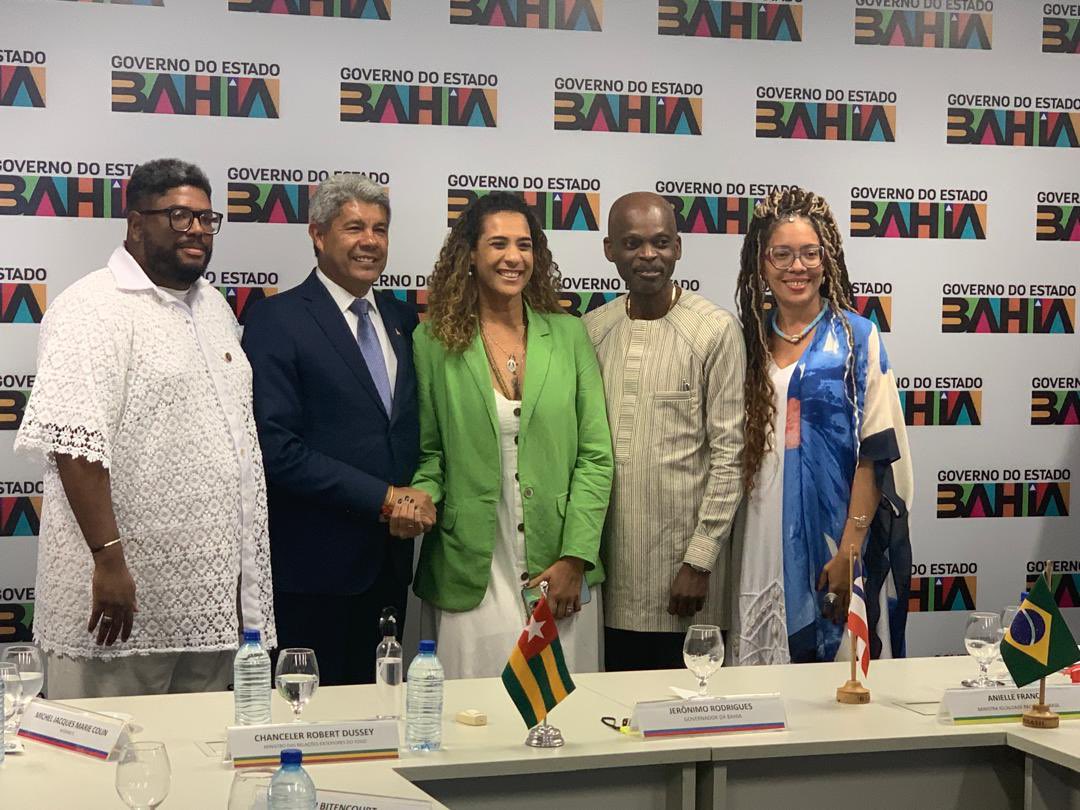
Bahia regional conférence Declaration
LETTER OF RECOMMENDATIONS FROM THE AFRICAN DIASPORA Honoring ancestry and celebrating the diversity of Afro-diasporic voices from experts, cultural personalities, references from social movements, and other representatives of civil society, Recalling the Conference of Intellectuals of Africa and the Diaspora, held in Dakar in 2004, the 2nd Conference of Intellectuals of Africa and the Diaspora, held in Salvador in 2006, and the Global African Diaspora Summit, held in Johannesburg in 2012, Reaffirming the Durban Declaration and Programme of Action, adopted in 2001, recalling the proclamation of the International Decade for People of African Descent (2015-2024) and supporting its renewal for an additional ten years, Celebrating the Decade of African Roots and the African Diaspora (2021 to 2031) established by the African Union, Considering the need to establish a new paradigm of humanity that integrates philosophical and epistemological values inherited from Africa by. the diaspora such as circularity, playfulness, and a matriarchal foundation, We, the participants of the 1st Conference of the African Diaspora in the Americas, held on August 29 and 30, 2024, in Salvador, address the authorities of the African Union and the countries of the Americas who will meet on August 31, 2024, as well as the 9th Pan-African Congress in Lomé, from October 29 to November 2, 2024, to make the following recommendations on “Pan-Africanism Memory, Restitution, Reparation, and Reconstruction”: August 30, 2024, Salvador, Bahia Declaration of Bahia (English version) Declaration of Bahia (French version) Declaration of Bahia (Spanish version) Declaration of Bahia (Portuguese version)
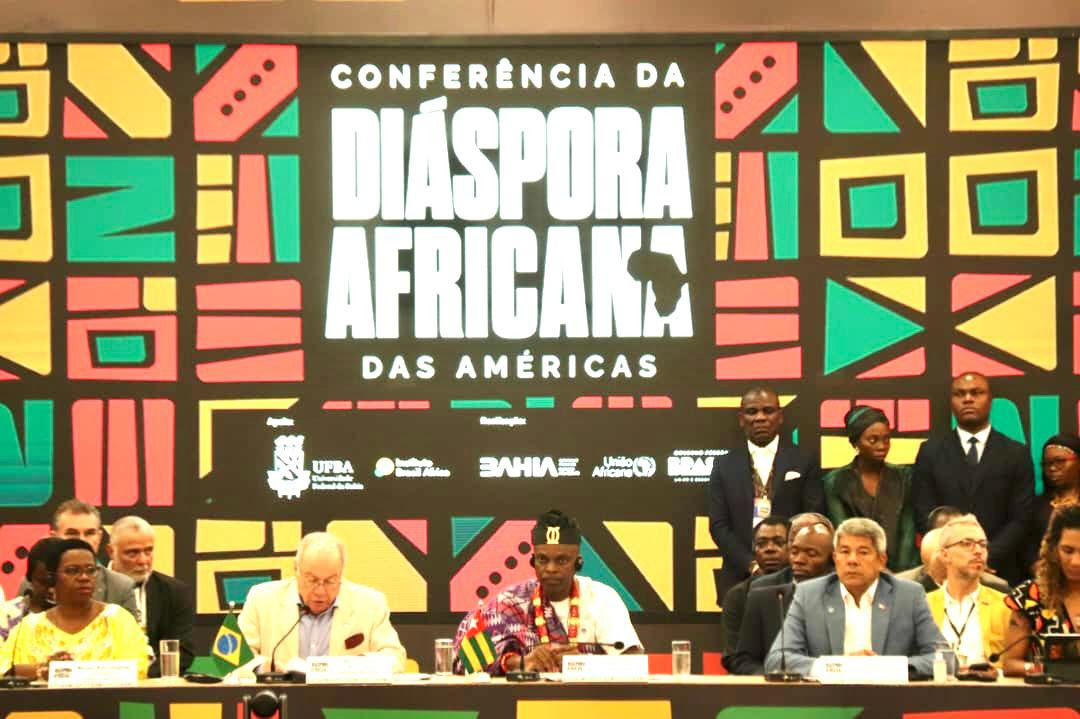
Diaspora Regional Preparatory Conference to the 9th Pan-African Congress of Lomé 2024
The Diaspora region and Afro-descendents conference of the 9th Pan-African Congress of Lomé 2024 (Governmental Segment) takes place on August 31, 2024 in El Salvador, BAHIA. The conference, whose theme is “Memory, restitution, reparation and reconstruction”, was attended by leading figures from the Caribbean, the Americas and the Pacific, including the President of the Federative Republic of Brazil, Luiz Inacio Lula da Silva. Afro-descendant countries and civil society were also present. In choosing the theme for this 6th and final pre-congress, as a prelude to the 9th Pan-African Congress to be held in Lomé from October 29 to November 02 2024, the High Committee in charge of the Decade of African Roots and Diasporas 2021-2031, set up by the 34th session of the Assembly of Heads of State and Government of the African Union, was undoubtedly keen to put the essential issues so dear to the hearts of Africans and Afro-descendants back at the heart of the debate. The conference was marked by a number of speeches, including that of the Togolese Minister of Foreign Affairs, African Integration and Togolese Abroad, Prof. Robert DUSSEY, who said that the conference marked a historic step in relations between the peoples of Africa and their sisters and brothers who, by the fruit of history, found themselves on the other side of the Atlantic Ocean. The head of Togolese diplomacy took the opportunity to pay a vibrant tribute to the Brazilian authorities for their political courage and tireless struggle for a Brazilian society reconciled with itself. ————————– Read the closing speech of Prof. Robert DUSSEY ————————–
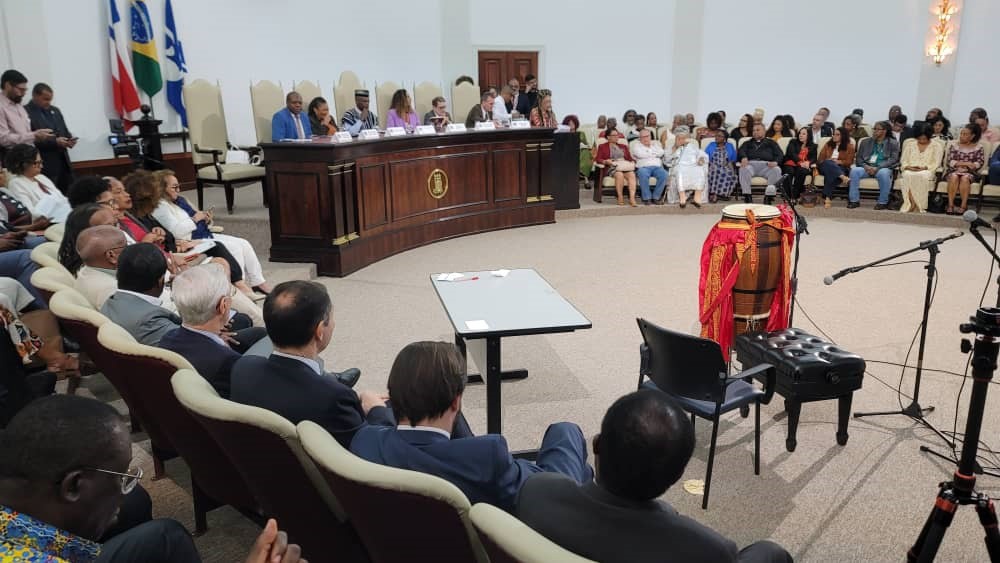
Diaspora & Afro-descendants conference in Salvador de Bahia (Civil society segment)
The theme “Memories, Restitutions, Reparations and Reconstruction” brought together African diasporas and Afro-descendants in Salvador de Bahia from August 29 to 31, 2024, for the 6th and final pre-conference ahead of the 9th Pan-African Congress in Lomé. Organized as part of the “Decade of African Roots and Diaspora” (2021-2031), the conference aims to strengthen ties between Africa and its diaspora, while addressing key issues related to the theme. The African Union considers the diaspora to be an essential component of modern Africa. Since 2006, it has included the diaspora as its 6th region, defining it as “the gathering of people of African origin living outside the continent, irrespective of their citizenship and nationality”. This recognition paved the way for initiatives to strengthen cultural, social and economic ties between Africans on the continent and those of the African diaspora in the Americas, marking Brazil’s interest in playing a key role in this global dialogue. The conference addressed crucial themes for the African diaspora, including collective memory, pan-Africanism, the reconstruction of identities and restorative justice. These topics are of paramount importance in understanding and overcoming the traumatic legacy of the transatlantic slave trade, recognized in 2001 by the World Conference against Racism in Durban as a crime against humanity. The state of Bahia, known for its rich Afro-Brazilian culture and large Afro-descendant population, was chosen to host this globally important conference. Salvador, with its history deeply rooted in Afro-Brazilian culture, is the ideal place to host this conference. Brazil is home to the largest Afro-descendant population outside the African continent, and the state of Bahia is its beating heart. The city of Salvador embodies the living bridge between Africa and the Americas, not only through its people, but also through its traditions, religions and music, all of which are steeped in African heritage. The Bahia Conference marks a significant milestone in the dialogue on Pan-Africanism, a dialogue that now also encompasses the countries of the Americas. At a time when the world is facing global challenges such as climate change, racial injustice, and economic inequality, this conference offers a platform to explore cooperative strategies that could foster a more just and prosperous future for people of African descent. This conference in Salvador is not just an international event, but a historic moment for the African diaspora, a time when memory, justice and reconstruction are at the heart of discussions for a better future. It reaffirms the importance of the African diaspora in shaping cultures and societies, while paving the way for new forms of cooperation between Africa and the Americas.